
How Learning How Printer Ink Is Made Made Me Rethink Buying A Printer
Printer ink is infamous... and for good reason.
.png)
Printer ink is infamous... and for good reason.
People joke about it, meme about it, and complain about it… but few realize just how bad the economics really are.
If you’re frustrated by how often you buy ink (or how quickly it dries out) here’s the deeper truth: printer ink pricing isn’t an accident. It’s the entire business model.
And it’s one big reason home printers no longer make sense for most people.
Most modern inkjet printer inks are complex mixtures. Common components include:
- Colorants - pigments or dyes that give the ink its color.
- Solvents or liquid carriers - the “vehicle” that carries pigment/dye through the printheads, controlling viscosity, flow, and drying. For common desktop printer inks this can be water-based or solvent/oil-based.
- Resins / binders / varnish - these help the ink adhere to paper, improve durability, gloss or resistance to smudging, and help bind pigment particles.
- Additives - including surfactants, humectants (to keep ink from drying out), dispersants (to keep pigment particles evenly suspended), drying agents, preservatives/biocides (to prevent microbial growth in wet ink), stabilizers, etc.
In short: printer ink is more like a custom chemical blend, similar in complexity to some paints or industrial coatings than a simple “liquid ink.”
Sounds pretty toxic, doesn't it?
Ink manufacturing roughly follows these steps:
Colorant preparation - grinding or dissolving pigments/dyes to the correct particle size (for pigment inks, micron-sized particles; for dye-inks, fully dissolved).
Mixing with solvent + binder + additives - solvents, resins/varnish, stabilizers and surfactants are blended to create a fluid with correct viscosity (thickness), surface tension, drying characteristics, adhesion, and nozzle-safety.
Testing and quality control - ink must flow through microscopic nozzles reliably; must dry properly on paper without smearing or bleeding; must maintain long shelf life, color stability, and compatibility with various paper/paper finishes.
Filling cartridges under controlled conditions - sealed cartridges, often with chips or firmware locks, to prevent easy refilling or reuse.
Because of the chemical complexity, precision, and quality control, printer inks cost more to produce than what the retail price suggests. Much of the high price comes from packaging, proprietary formulation, intellectual property, and brand/licensing protections, rather than the raw materials alone.
Think we're exaggerating? Printer ink regularly beats:
- premium scotch: (Macallan Oak 18): $18/oz
- designer skincare lotion: $63/oz
- Chanel No. 5 - $63/oz
A typical inkjet cartridge costs $30–$80 and contains only a few milliliters of ink. That translates to $75 per ounce* on average.
For context:
- Gasoline: ~$4 per gallon ($0.03/oz)
- Milk: ~$3 per gallon ($0.02/oz)
- Olive oil: ~$20–$40 per gallon ($0.31/oz)
- Champagne: ~$150 per gallon ($1.17/oz)
- The most expensive bottle of Dom Perignon - $5184/bottle: ($51.06/oz)
It’s absurd — and it’s intentional.
* Prices shown are meant to be representative, not absolute. Printer ink pricing varies heavily by model, manufacturer and cartridge type. Luxury product price-per-ounce varies by size.
Sources:
https://www.tonerbuzz.com/blog/why-is-printer-ink-so-expensive/ https://www.gflesch.com/blog/why-printer-ink-is-so-expensive https://www.chanel.com/us/fragrance/p/125530/n5-eau-de-parfum-spray/ https://www.thewhiskyexchange.com/p/1046/macallan-18-year-old-sherry-oak https://www.cremedelamer.com/ https://www.christies.com/en/department/wine-spirits-56-1/overview https://www.eia.gov/petroleum/gasdiesel/ https://www.ers.usda.gov/data-products/
This is the "razor-and-blade" model:
- The razor (the printer) is sold cheap
- The blades (ink cartridges) are the recurring profit stream
Many printers are even sold below cost because companies know they’ll make the money back on ink, especially from customers who print infrequently and waste most of their cartridges to clogs and drying.
Printer ink isn’t stable like paint or oils.
Once opened, it naturally:
- evaporates
- thickens
- clogs
- dries in the nozzles
If you don’t print regularly, you don’t get to use the full cartridge before it’s ruined. This forces you into a cycle:
Buy new cartridges
Printer won’t print
Run cleaning cycles (burning even more ink)
Replace the cartridge anyway
The cost per print skyrockets into the $5–$20 range for many households, and this doesn't include time spent getting your document to print correctly in the first place.
Modern printers often include firmware updates that:
- reject compatible cartridges
- disable refilled cartridges
- display “incompatible ink” errors
- force you back to expensive OEM cartridges
Similar to high-end car manufacturers, many printers will reject cartridges that aren't OEM (original equipment manufacturer) parts. It’s a documented, ongoing pattern across multiple printer brands.
The claim is the print manufacturers "can't perform quality assurance" on the 3rd party print cartridges, and thus they can't confirm whether or not a defect could potentially damage the printer. Once your printer blocks third-party ink, you’re captive to whatever your manufacturer charges.
As we discussed earlier, ink cartridges are made of:
- rigid plastic shells
- microchips
- industrial dyes and solvents
It's estimated that 375 million cartridges are thrown away annually in the U.S.* Lined up end-to-end, that's enough to stretch from New York to Los Angeles 10 times.
They take hundreds of years to decompose.
And because many consumers print infrequently, cartridges expire or dry out before being fully used, dramatically increasing plastic waste.
Home printers are the environmental equivalent of single-use plastics.
source: https://www.inkrecycling.org/environment/
Ink is often the largest cost of printer ownership, not the printer itself.
For low-volume households, the total cost per printed page is shockingly high once you factor in:
- wasted ink
- dried ink
- cleaning cycles
- clogged nozzles
- firmware lockouts
- unused color channels
- expiring cartridges
If you print intermittently, the economics simply don’t work.
You don’t need to buy cartridges, clean printheads, or watch ink evaporate between uses.
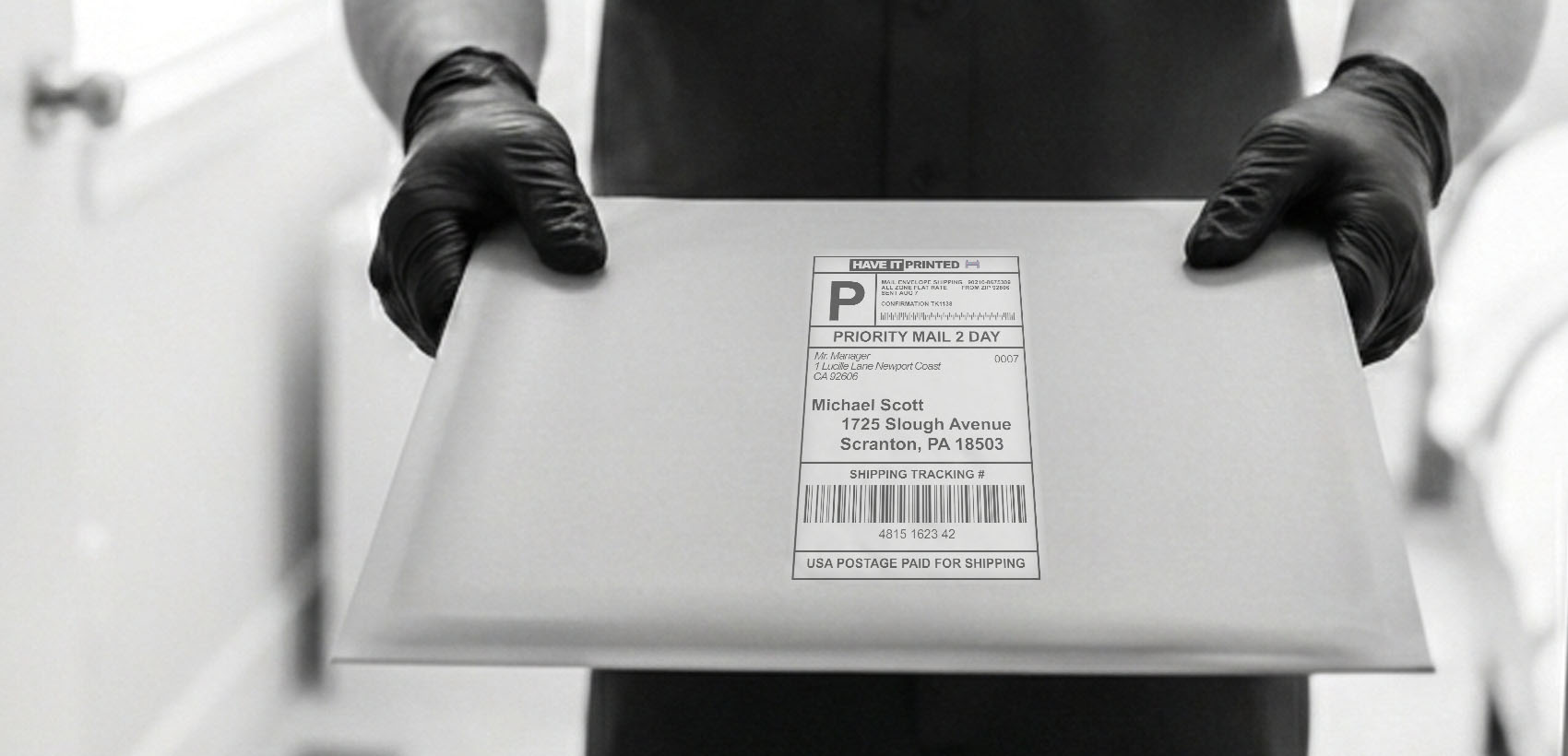
With Have It Printed , you upload a file online and we handle:
- printing
- packaging
- postage
- delivery
- tracking
No ink. No cartridges. No maintenance.
Just a clean printed document delivered where you need it.